



Neurokinin Receptor
NK receptor; Tachykinin receptor
There are three main classes of neurokinin receptors: NK1R (the substance P preferring receptor), NK2R, and NK3R. These tachykinin receptors belong to the class I (rhodopsin-like) G-protein coupled receptor (GPCR) family. The various tachykinins have different binding affinities to the neurokinin receptors: NK1R, NK2R, and NK3R. These neurokinin receptors are in the superfamily of transmembrane G-protein coupled receptors (GPCR) and contain seven transmembrane loops. Neurokinin-1 receptor interacts with the Gαq-protein and induces activation of phospholipase C followed by production of inositol triphosphate (IP3) leading to elevation of intracellular calcium as a second messenger. Further, cyclic AMP (cAMP) is stimulated by NK1R coupled to the Gαs-protein. The neurokinin receptors are expressed on many cell types and tissues.
Neurokinin Receptor Isoform Specific Products
All Product Categories
-
Neurokinin Receptor Inhibitors
(23)
View all products
-
Neurokinin Receptor Agonists
(41)
View all products
-
Neurokinin Receptor Antagonists
(156)
View all products
-
Neurokinin Receptor Activator
(1)
View all products
-
Neurokinin Receptor Modulators
(7)
View all products
-
Neurokinin Receptor Controls
(3)
View all products
-
Neurokinin Receptor Related Products (279)
Related Products (279)

-
Antibodies (4)
-
Neurokinin Receptor Isoform Comparison
-
Nolpitantium
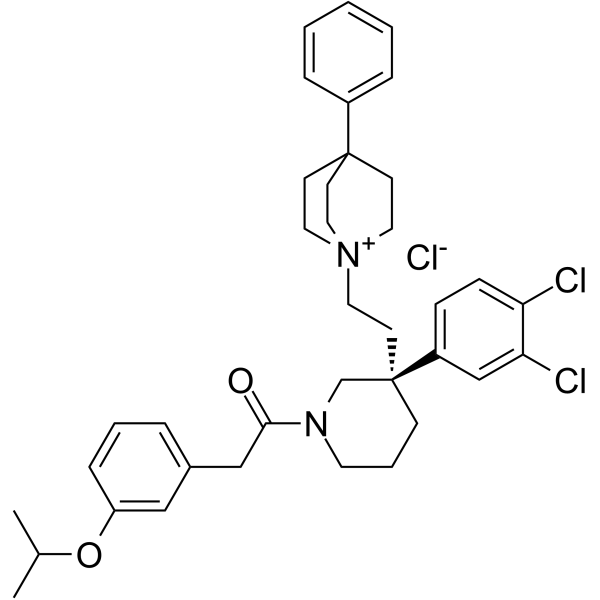 0 ImagesCat. No.: HY-108479CAS No.: 153050-21-6Synonyms: SR140333Nolpitantium (SR140333) is a potent, selective, competitive, non-peptide tachykinin NK1 receptor antagonist. Nolpitantium blocks the activation of rat thalamic neurons after nociceptive stimulation.
-
γ-Neuropeptide (rabbit)
 0 Imagesγ-Neuropeptide (rabbit) can be isolated from rabbit intestine. γ-Neuropeptide is an endogenous neurokinin peptide that acts as a neurokinin 2 (NK2) receptor agonist. γ-Neuropeptide mediates hypothalamic-pituitary-adrenal (HPA) axis, as well as reproductive hormone release.
-
Septide
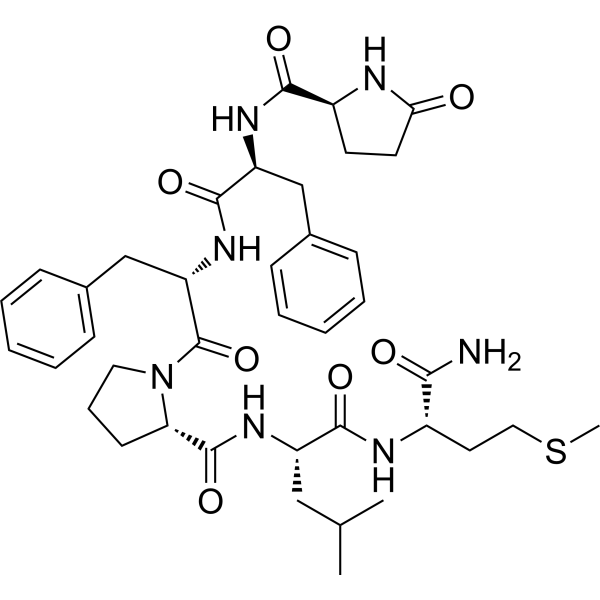 0 ImagesSynonyms: (Pyr6,Pro9)-Substance PSeptide ((Pyr6,Pro9)-Substance P) is a potent NK1 receptor agonist with a Kd value of 0.55 nM.
-
L-760735
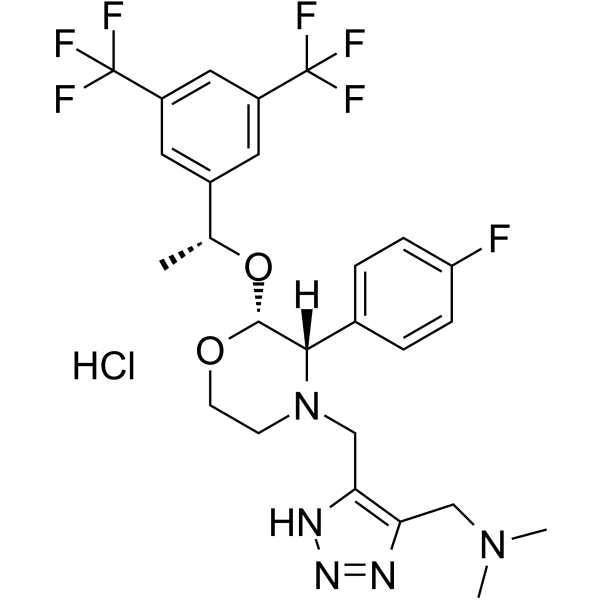 0 ImagesL-760735 is a high affinity, selective and orally active NK1 receptor antagonist with an IC50 of 0.19 nM for human NK1 receptors. L-760735 exhibits anxiolytic and antidepressant-like effects.
-
GR 94800
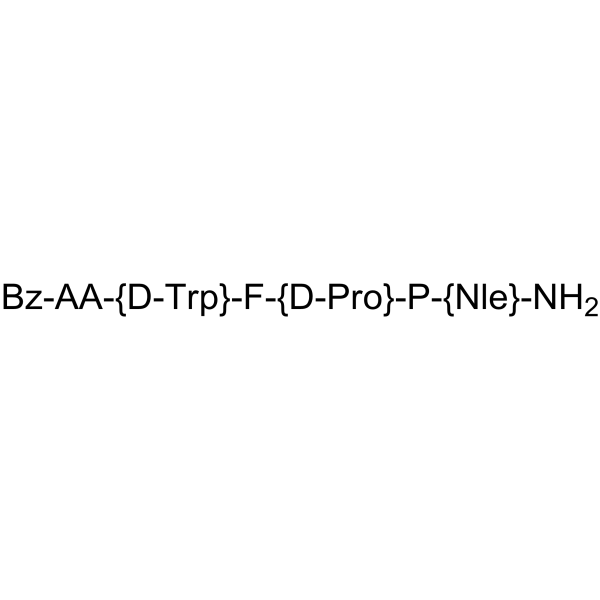 0 ImagesGR 94800 is a potent and selective NK2 receptor peptide antagonist, with pKB values of 9.6, 6.4 and 6.0 for NK2, NK1 and NK3 receptors, respectively.
-
SB 218795
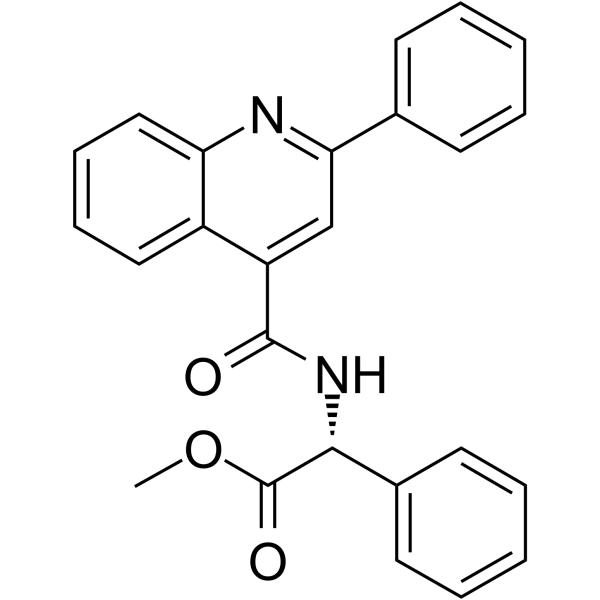 0 ImagesSB 218795 is a potent and selective non-peptide NK3 receptor antagonist, with a Ki 13 nM for hNK3. SB 218795 shows about 90-fold and 7000-fold selectivity for hNK3 over hNK2 and hNK1, respectively. SB 218795 can inhibit NK3 receptor-mediated pupillary constriction of the rabbit.
-
Substance P Receptor Antagonist 1
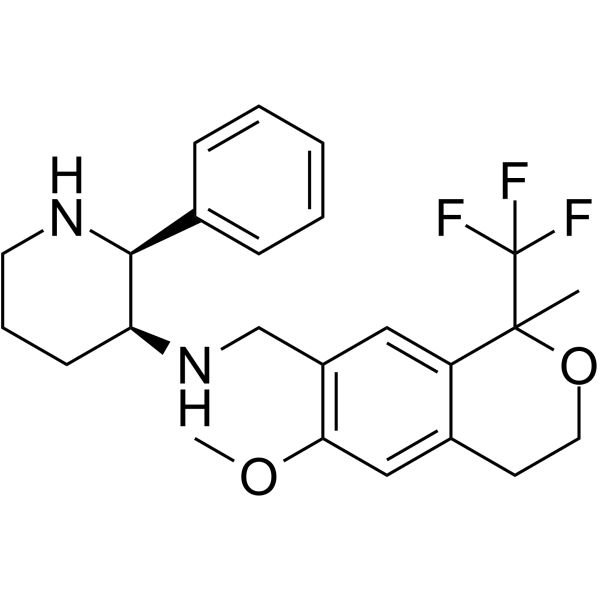 0 ImagesSubstance P Receptor Antagonist 1 has the potential function in central nervous system disorders, respiratory, inflammatory diseases and gastrointestinal disorders.
-
SB 235375
 0 ImagesSB 235375 is a potent and selective antagonist of the human neurokinin-3 (hNK-3) receptor designed by optimizing the structure of 2-phenyl-4-quinolinecarboxylic acid amide. SB 235375 displays high affinity for the hNK-3 receptor, with significantly higher binding affinities than hNK-2 and hNK-1 receptors. In vitro studies demonstrated its ability to block NK-3 receptor-mediated contraction and calcium mobilization, while in vivo, SB 223412 demonstrated oral and intravenous activity against NK-3 receptor-driven responses in animal models.
-
[His11]Substance P
![[His11]Substance P](https://file.medchemexpress.com/product_pic/hy-p3925.gif "Click to View [His11]Substance P Product Detail") 0 ImagesCat. No.: HY-P3925Purity: 98.97%[His11]Substance P is an analog of Substance P (HY-P0201). Substance P is a neuropeptide, acting as a neurotransmitter and as a neuromodulator in the CNS.
0 ImagesCat. No.: HY-P3925Purity: 98.97%[His11]Substance P is an analog of Substance P (HY-P0201). Substance P is a neuropeptide, acting as a neurotransmitter and as a neuromodulator in the CNS.
-
Y1 receptor antagonist 1 formic
 0 ImagesCat. No.: HY-101704APurity: 99.84%Synonyms: H 409-22 (isomer formic)Y1 receptor antagonist 1 (H 409-22 isomer) formic (Example 4) is a neuropeptide Y1 receptor antagonist. Y1 receptor antagonist 1 can be used for the study of cardiovascular diseases, such as vasoconstriction.

-
(β-Ala8)-Neurokinin A (4-10)
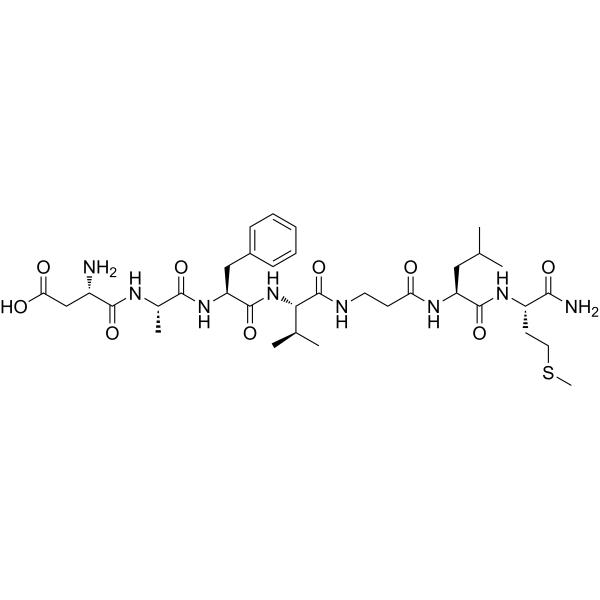 0 Images(β-Ala8)-Neurokinin A (4-10), a neuropeptide, is a potent and selective NK-2 tachykinin receptor (Neurokinin Receptor) agonist.
-
WIN 51708
 0 ImagesWIN 51708 is a nonpeptide antagonist of neurokinin (NK)-1 receptor. WIN 51708 has a higher affinity for the rat NK-1 receptor compared to the human NK-1 receptor.
-
Orvepitant
 0 ImagesCat. No.: HY-122347CAS No.: 579475-18-6Synonyms: GW823296Orvepitant (GW823296) is potent, selective, orally active and well-tolerated neurokinin-1 receptor (NK-1) antagonist with a pKi of 10.2 for human neurokinin-1 receptor. Orvepitant can across the blood-brain barrier. Orvepitant has the potential for depressive disorder and chronic refractory cough (CRC) treatment.
-
L-659874
 0 ImagesCat. No.: HY-P2593CAS No.: 125989-15-3L-659874 is a selective NK2 receptor antagonist with an IC50 value of 0.49 μM in hamsters. L-659874 inhibits NK2 receptor-mediated hydrolysis of inositol phospholipids. L-659874 could be used for research on the correlation between pain signal transduction and smooth muscle responses.
-
SCH-720881
 0 ImagesCat. No.: HY-178269CAS No.: 2238886-63-8SCH-720881 is the active metabolite of Rolapitant (HY-14751). Rolapitant (SCH619734) is a potent, selective, long-acting and orally active neurokinin 1 (NK1) receptor antagonist with a Ki of 0.66 nM. Rolapitant does not interact with CYP3A4. Rolapitant shows potent anti-emetic activity in a ferret emesis model.
-
Substance P (6-11)
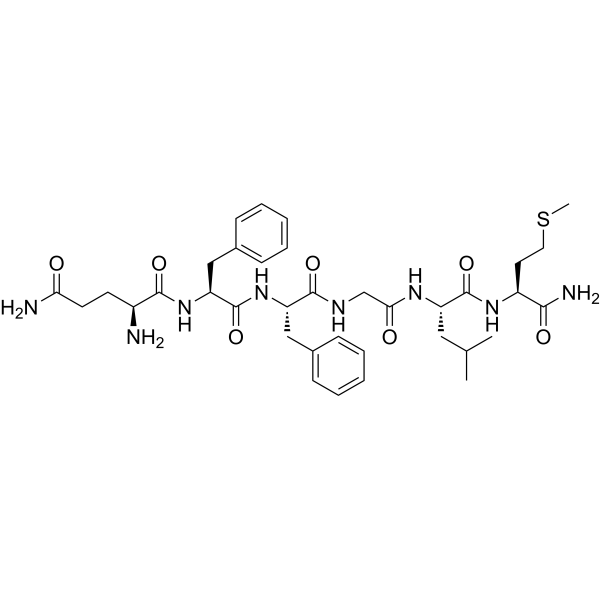 0 ImagesCat. No.: HY-P3889CAS No.: 51165-07-2Substance P (6-11) is the C-terminal hexapeptideamide of Substance P (HY-P0201). Substance P (6-11) binds to NK-1 tachykinin receptor. Substance P (6-11) shows depolarization of motoneurons and a hypotensive effect.
-
N-Acetyl-L-tryptophan-d3
 0 ImagesCat. No.: HY-W011978SN-Acetyl-L-tryptophan-d3 is the deuterium labeled N-Acetyl-L-tryptophan (HY-W011978). N-Acetyl-L-tryptophan is an antagonist of the neurokinin-1 receptor (NK-1R), disrupting the binding of substance P (SP) to NK-1R. This action provides neuroprotective effects, improving memory deficits and motor impairments. N-Acetyl-L-tryptophan is also an inhibitor of cytochrome c (Cytochrome c), and it exerts antioxidant and anti-inflammatory effects by inhibiting the expression of IL-1β and the activation of caspase-1. N-Acetyl-L-tryptophan holds promise for research in neurodegenerative and inflammatory diseases.
-
Biotin-Neurokinin A
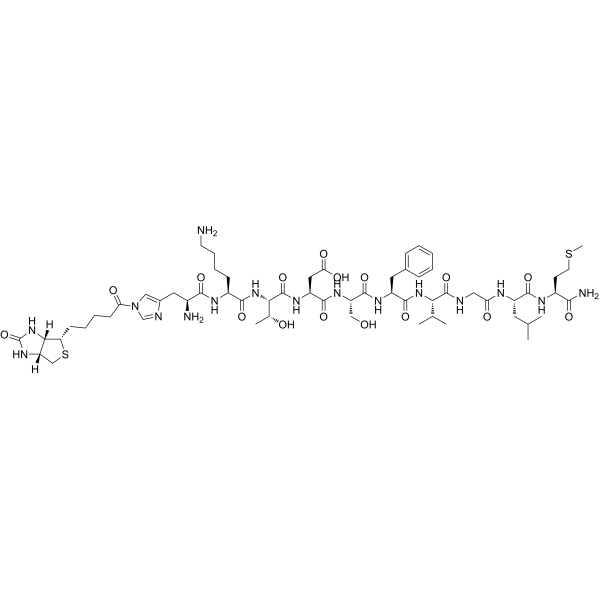 0 ImagesCat. No.: HY-P3861Purity: 98.10%Biotin-Neurokinin A is a biotinylated Neurokinin A (HY-P0197). Neurokinin A (Substance K), a peptide neurotransmitter of the tachykinin family, acts via the NK-2 receptor. Neurokinin A acts as a major mediator in human airway and gastrointestinal tissues.
-
Substance P(1-4)
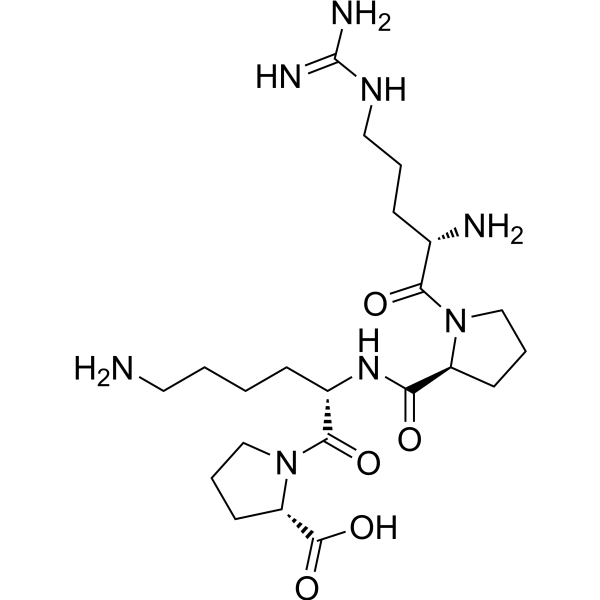 0 ImagesCat. No.: HY-P3598CAS No.: 57468-16-3Substance P(1-4) is a potent neurokinin receptors (NK-R) antagonist. Substance P(1-4) has regulation of normal hematopoiesis and inhibits endogenous erythroid colony (EEC) formation.




